From prompt to product in minutes: how Creatr hit 10K users in its first month and anchored a $1.2M seed raise
- AI
- 0 → 1
- Founding designer
- Role
- Founding DesignerProduct · Design · CS
- Team
- 4 people2 eng · 2 non-tech
- Timeline
- ~5 monthsconcept → launch
- Outcome
- 10K+ users$1.2M seed
We launched Creatr in under five months with a team of four: 2–3K sign-ups on launch day, 10K+ users in the first month, and the working product anchored the $1.2M seed round that closed six weeks later.
Why this mattered
This was late 2023. There was no Claude Artifacts, no GPT design mode; "type a sentence, get an editable UI" did not exist as a product category yet. Design wasn't supporting the business; it was the business: Creatr was the first tool able to generate actual mobile UI from a prompt, not just wireframes. Uizard (later acquired by Miro) and Google's Stitch both topped out at wireframe-level output at the time. That gap was the entire demo.
The problem
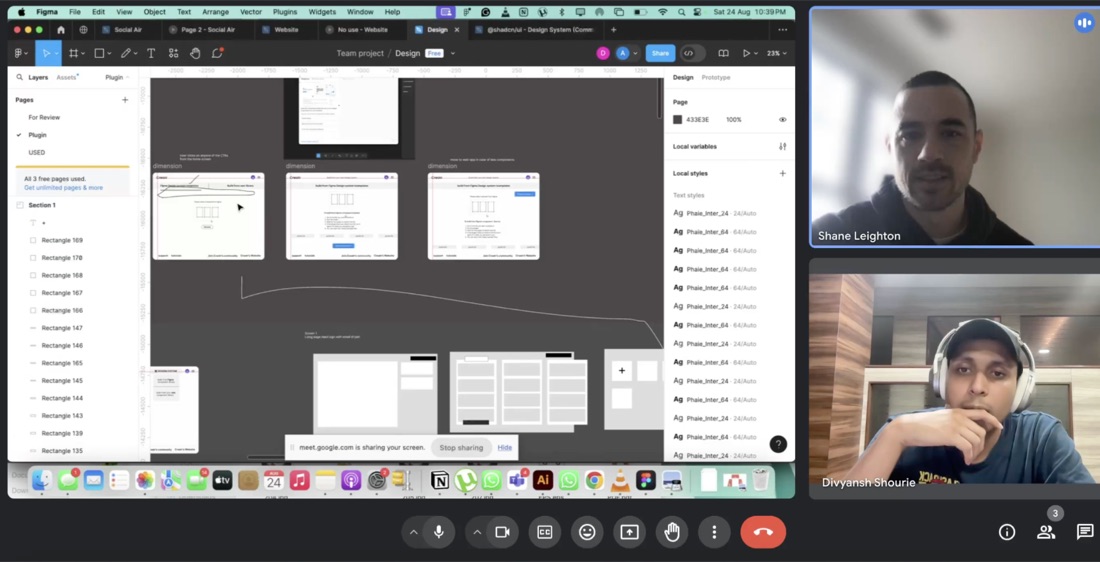
Early-stage teams and product managers don't struggle with ideas; they struggle with the distance between an idea and something visual enough to test, pitch, or hand to engineering. In two months of interviews with 80+ founders, product leads, and indie hackers, the same pattern repeated: ideas lived in docs, whiteboard photos, and Slack threads. Turning them into screens meant either waiting on a designer or fighting a tool built for one.
The bet: collapse idea-to-interface from weeks to minutes, and you change who gets to build products.
The reframe
We started out chasing the obvious ambition: a canvas-based tool in Figma's direction, powered by AI. Every user conversation made it worse: each designer wanted a different missing feature, a different workflow, a different reason we weren't Figma yet. We were accumulating a wishlist, not converging on a product.
Never build a design tool for designers.
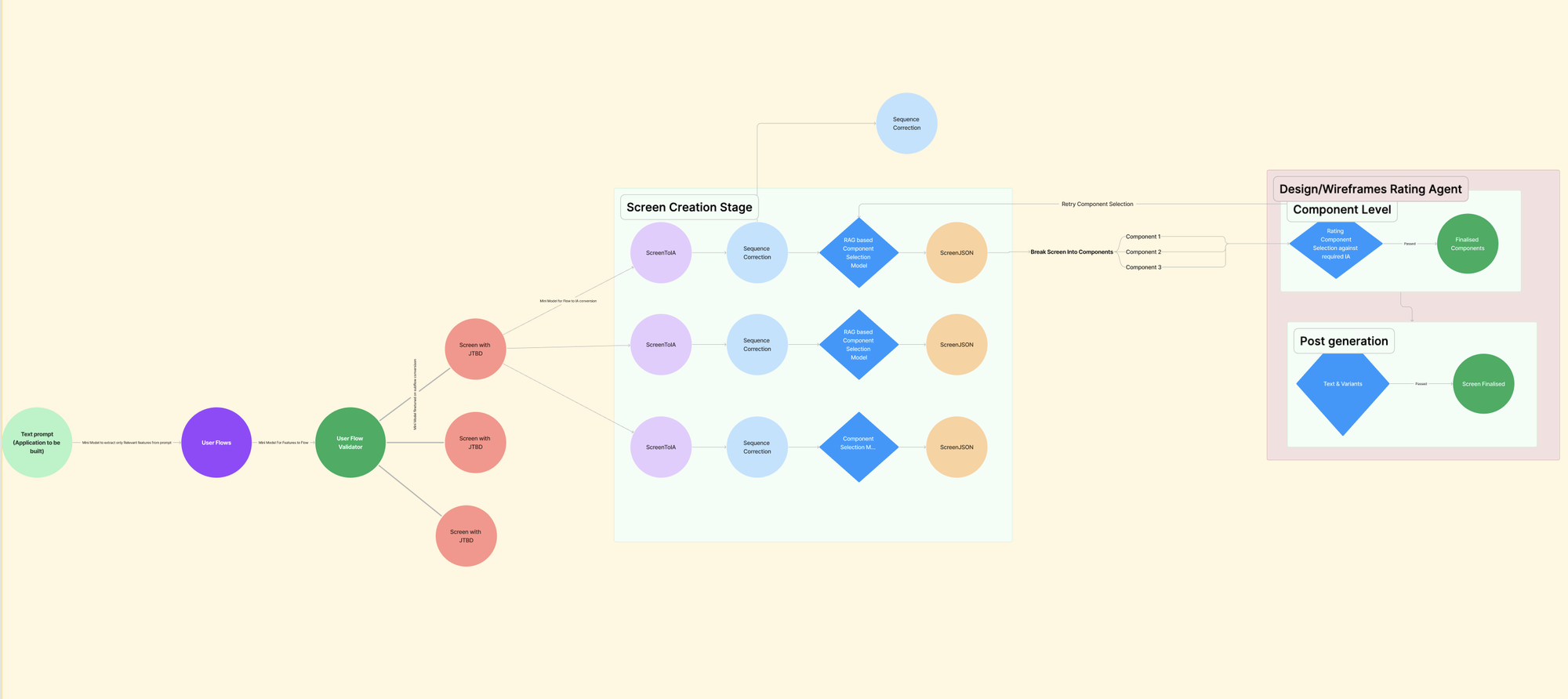
Designers already had their tool, and infinite patience for its complexity. The people drowning were upstream of design: product managers writing PRDs and describing screens in words, hating every minute of it. We already had the tech to parse a PRD and generate wireframes, and that was literally a PM's job, automated.
So we repositioned: Creatr became a prototyping tool for product managers. Type what you need, get design-quality screens, hand them to your designer as a reference or your engineer as a spec. In later versions, teams could upload their own design system and Creatr would generate screens in it: output that dropped into their real workflow instead of a lookalike mockup.
 Full size
 What we built
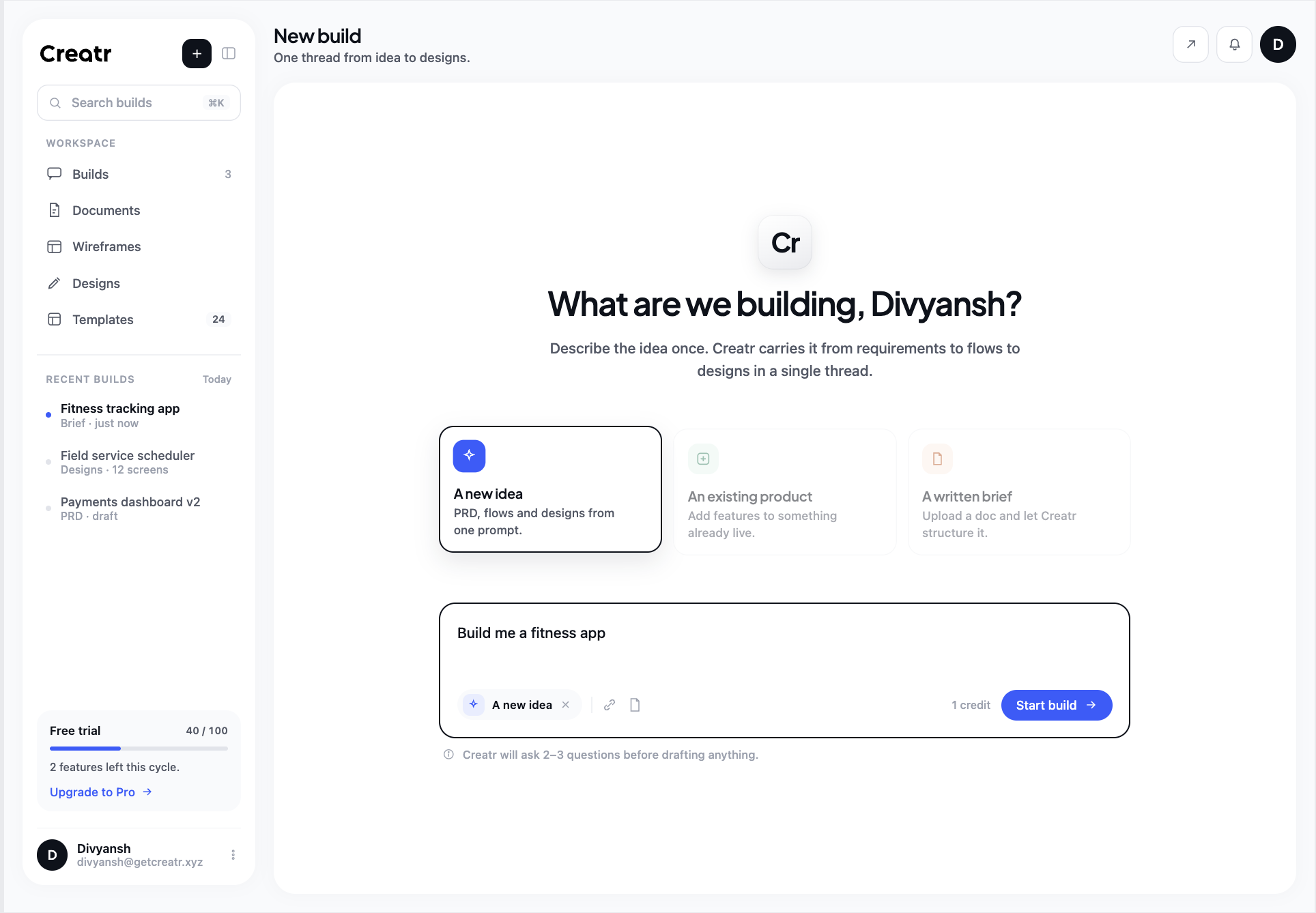
One input, minutes to output: describe the product you need, get editable screens on canvas, grouped, structured and ready to refine or export.
Step 1 of 9: New build. Next: Start build.
Creatr as a clickable prototype: one thread that carries an idea through the brief, the PRD, the feature pick, wireframes and designs. Only the next step is live; the pointer marks it.
- 01 / 04
Generate on demand, not everything at once
Creatr generates 2 to 3 screens at a time, with one-click generation for what comes next, so users steer the product's growth instead of getting dumped 25 screens of assumptions.
Traced to a customer call with an ex-Disney/ESPN PM who wanted control back from AI.
- 02 / 04
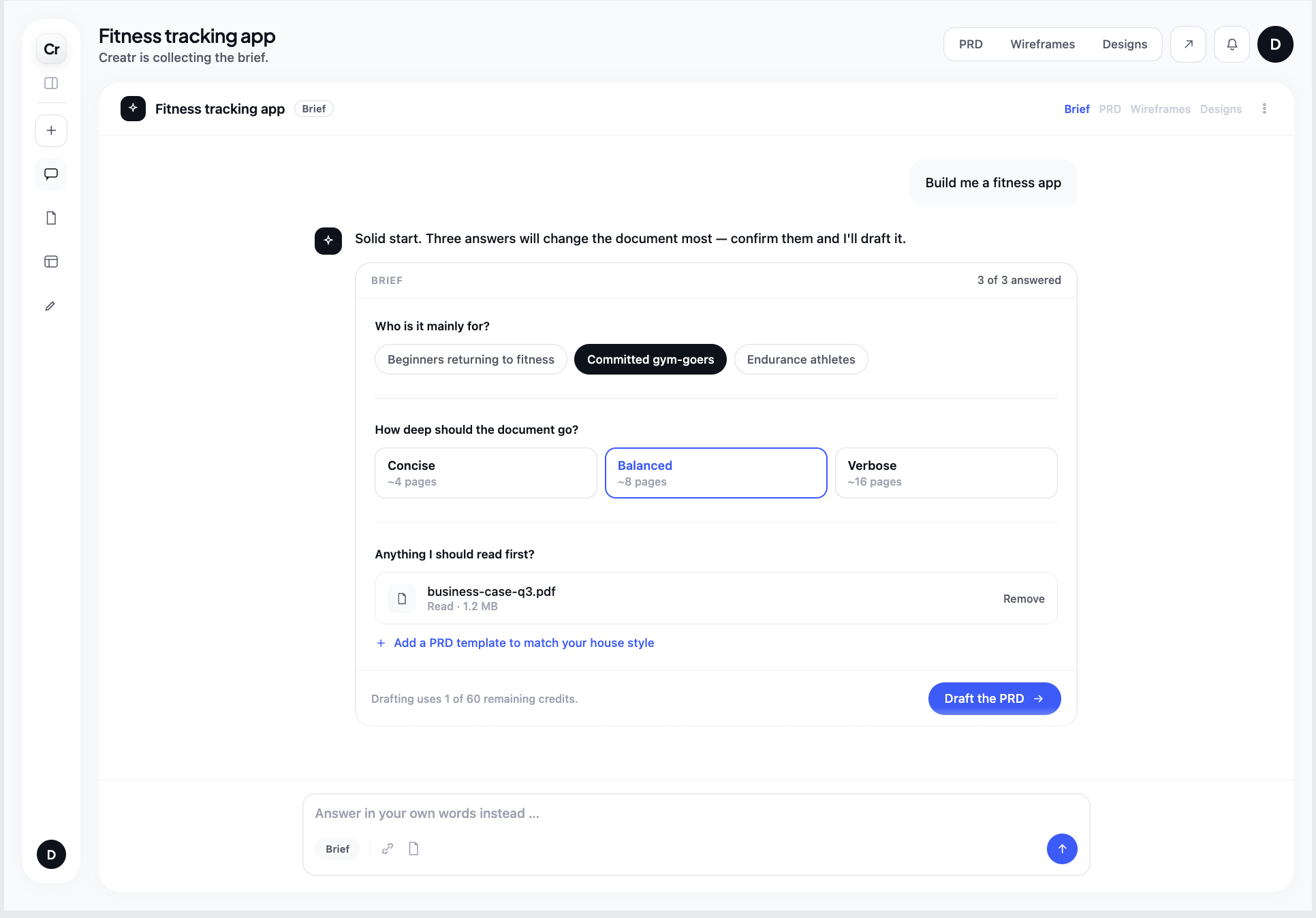
A brief that asks before it assumes
A one-line idea becomes a real starting point through a few targeted questions: who it's for, how deep the document should go, and what context to pull from. Answer in your own words or pick a suggestion, and the PRD drafts from there.
- 03 / 04
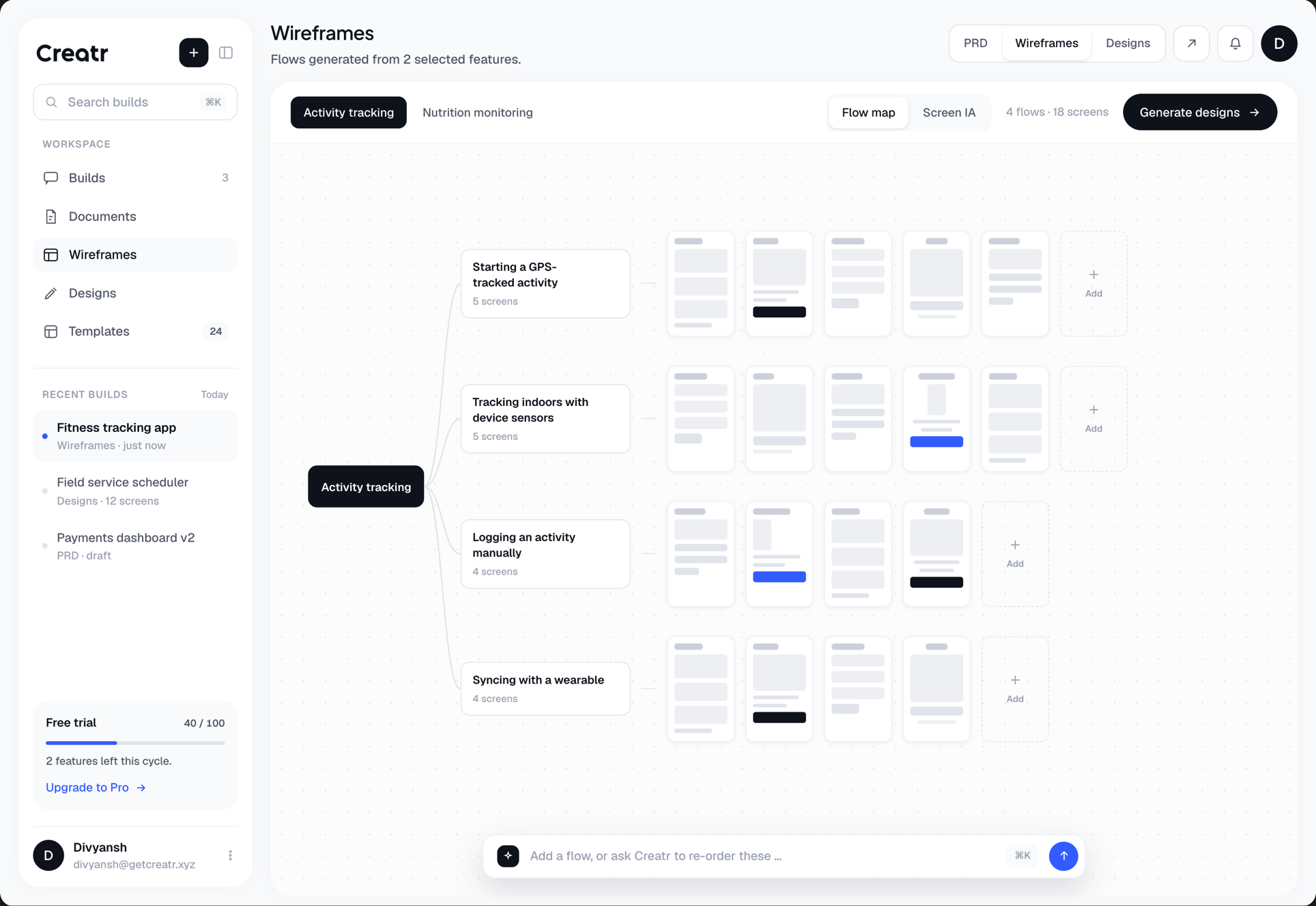
Every flow, broken into screens
A feature like Activity tracking splits into its real user flows: starting a GPS-tracked activity, tracking indoors, logging manually, syncing with a wearable. Each flow maps out its own screens automatically, ready to generate full designs from.
- 04 / 04
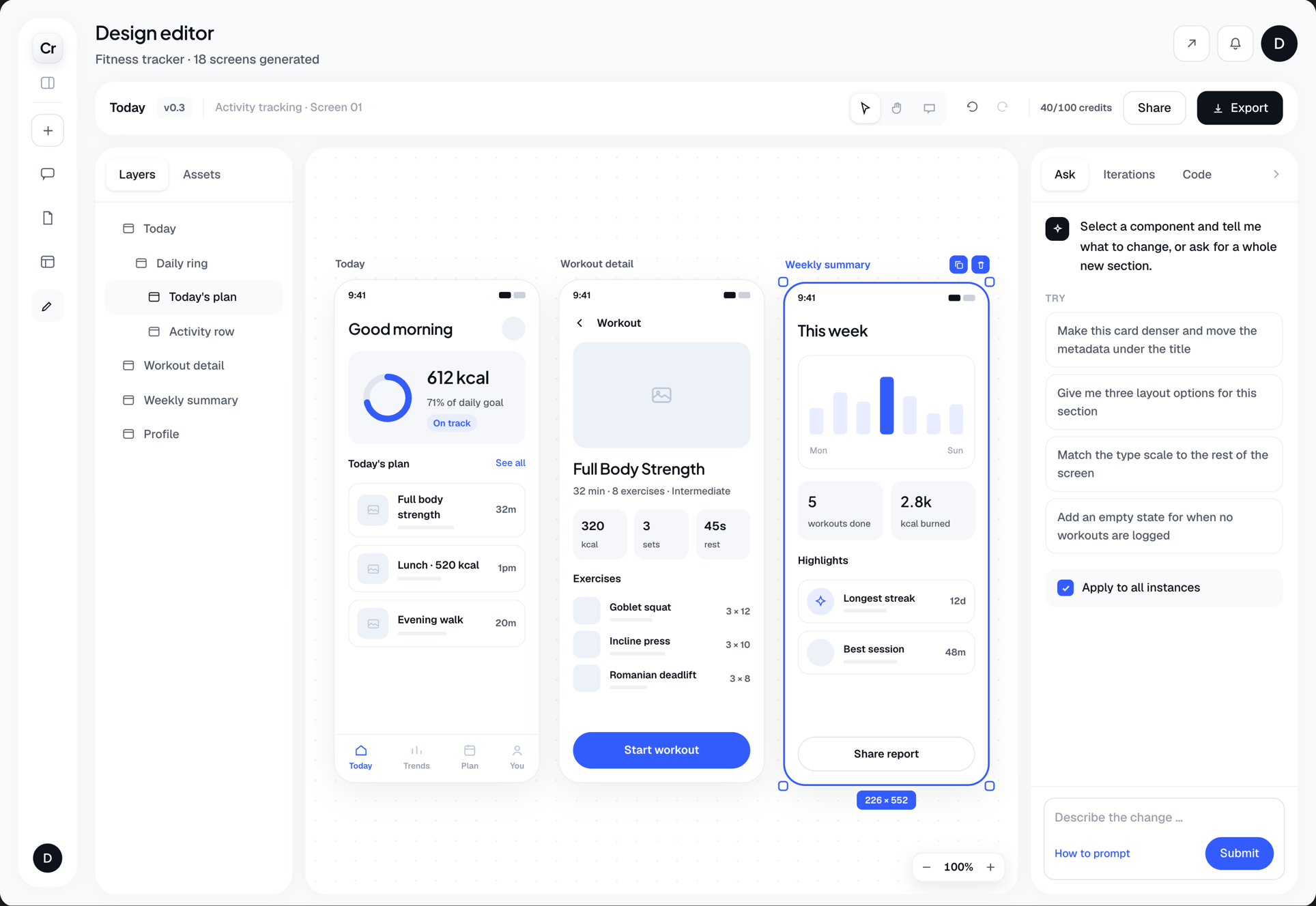
Screens you can actually edit
A real design editor, not just a preview: select any screen, layer, or section and ask for changes directly. Request layout options, adjust type or spacing, or apply an edit across every instance at once, all without leaving the canvas.
What we killed
The product above is the survivor. Two earlier versions of Creatr had to die first.
- Concept A
The full pipeline: PRD → wireframes → design
Start with a PRD, generate wireframes from it, generate designs from those. In supervised sessions with internal company teams, it worked: a full cycle in ~30 minutes with active input.
Why it diedIt only worked because we were in the room. The moment users ran it without us educating and hand-holding at every step, the journey collapsed. A product that needs its founders present isn't a product.
- Concept B
Whole flows at once: 20–25 screens per generation
Generate a complete user flow in one shot. Impressive in a demo, wrong everywhere else.
Why it diedSlow to generate, expensive in tokens, and dumped an unnavigable wall of screens onto the canvas. The product was assuming the user's product instead of asking. We cut generation to 2–3 screens with on-demand expansion, and everything improved at once: speed, cost, and comprehension.
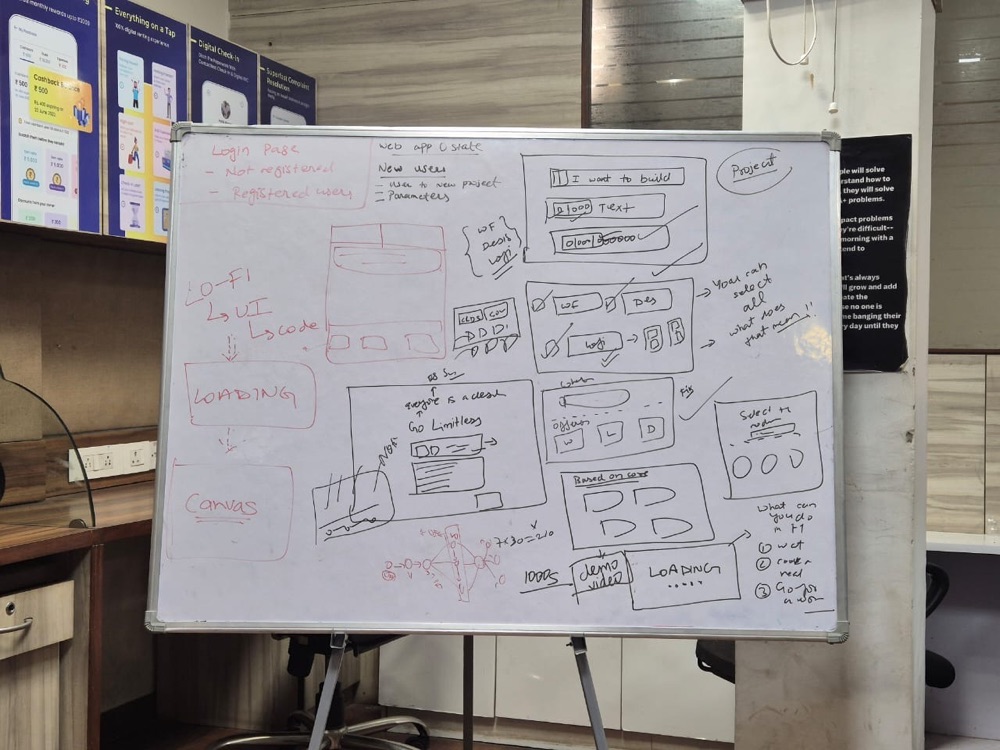
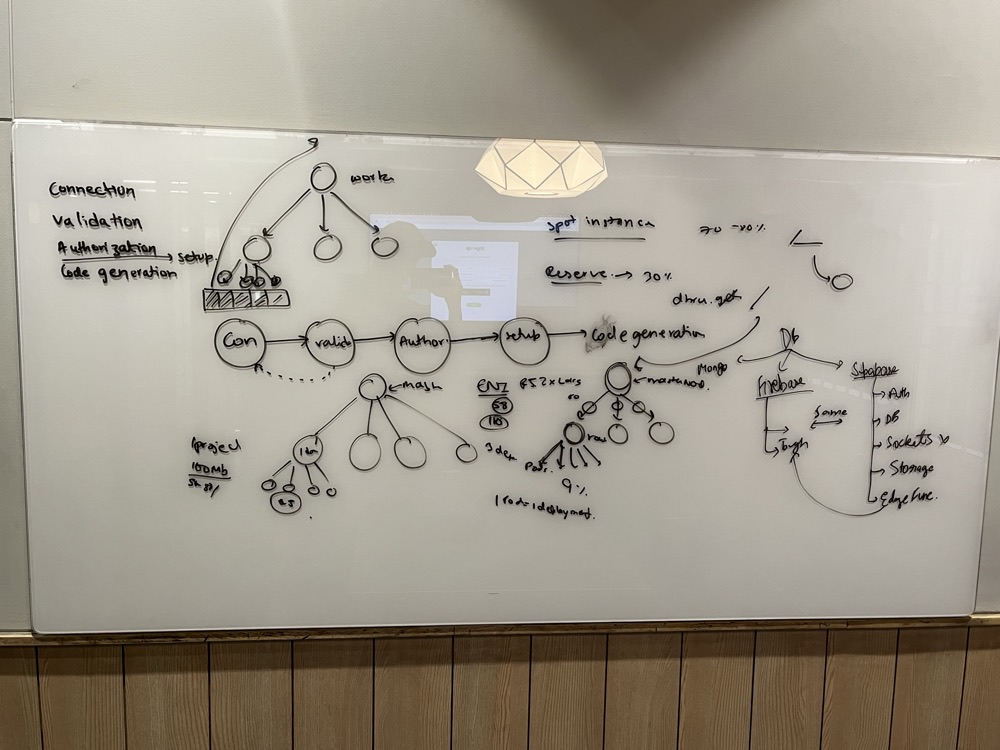
Killing Concept A took three weeks, not a whiteboard.
Killing Concept A wasn't a whiteboard decision; it took two to three weeks to make the case internally. I was running every user conversation, so I saw the failure pattern before anyone else did, and the pipeline was wired deep into how the product was built: walking away meant real engineering cost at a moment we had no time to waste.
I kept bringing the evidence, session after session of users getting lost without us, until the accumulated user pain made the decision undeniable. We refocused on prompt-to-design, and in later versions I found ways to restore the pipeline's structure through design alone, without forcing the journey on anyone.
Impact
- ~5 mo
Concept to public launch, team of four
- 10K+
Users in the first month · 2–3K on launch day
- $1.2M
Seed raised six weeks after launch, product as centrepiece
Reflection
- 01
Your users will name your product's real category before you do
We spent months trying to out-Figma Figma. One sentence from one user (someone we were listening to, not pitching) was worth more than our entire roadmap. Research isn't a phase; it's where direction comes from.
- 02
A product that only works with you in the room doesn't work
Our pipeline demoed beautifully and failed silently. Ever since, my test for any flow is: does this survive the user being alone, confused, and impatient? If it needs a guide, it's not done.
- 03
Doing customer success myself changed what I designed
The insight that reshaped Creatr didn't come from a research report; it came from a support conversation. An ex-PM from Disney and ESPN told me, almost in these words, that he didn't want AI making decisions for him; he wanted control back. Taking that conversation directly, not through a research layer, meant it reached me raw and became the lens for every decision after. Owning CS wasn't a distraction from design. It was my highest-signal research channel.